Eligibility and document checklist
Personal Loan Requirements in Canada
Providers commonly review identity, income, address, banking, debts and credit information. Preparing accurate evidence can make the process clearer, but no checklist guarantees approval.
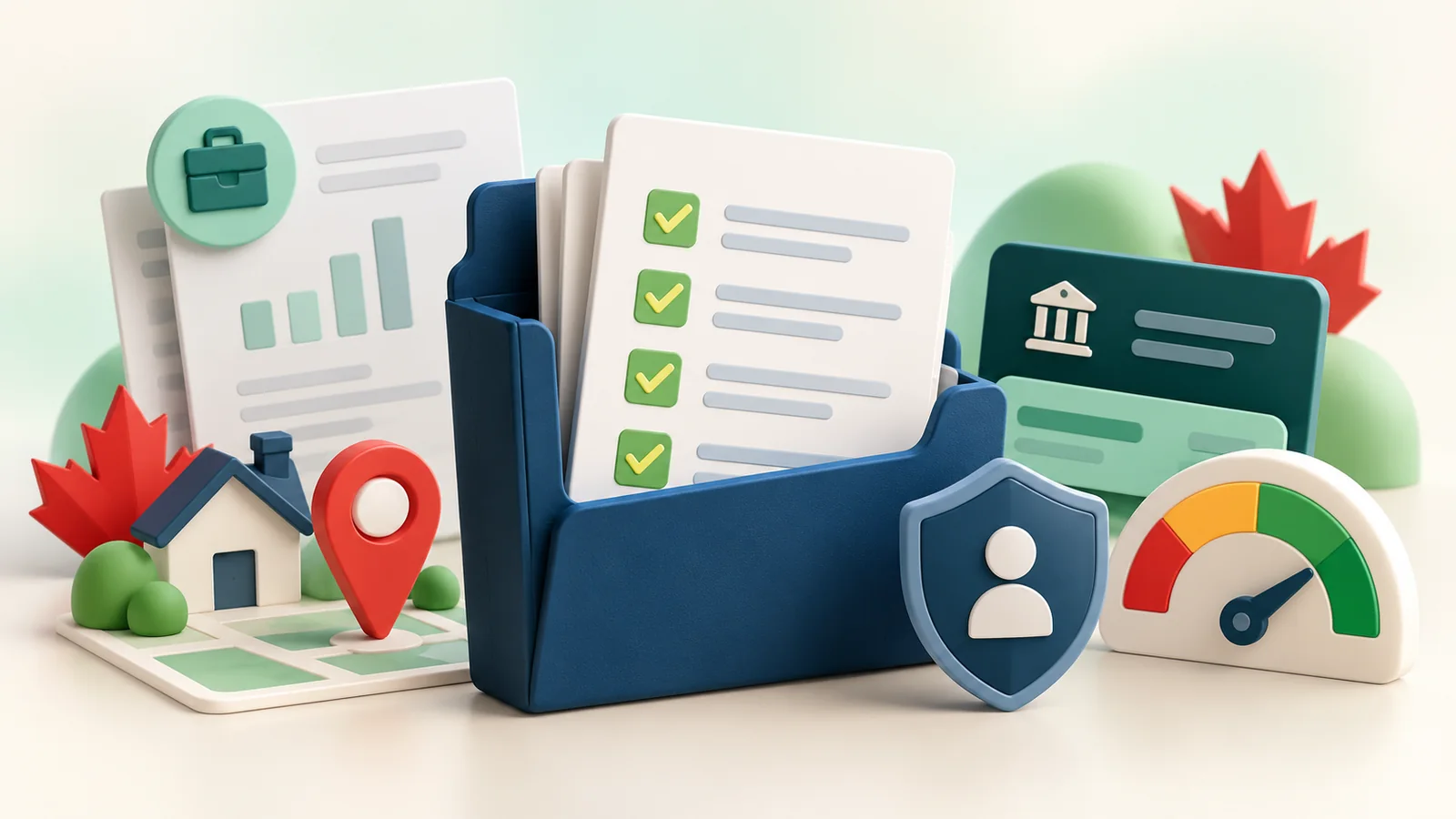
Common personal-loan requirements
The Financial Consumer Agency of Canada (FCAC) says lenders generally require proof of regular income, a bank account and a permanent address. Most lenders also run a credit check when a person applies. The credit report, credit score and existing debts can influence the type of loan and rate available.
A provider may also need to confirm age, legal identity, Canadian residence or provincial availability, contact details and the purpose or amount of the request. Exact rules vary by provider and product.
Lendari is a comparison and referral platform, not a lender. Completing the comparison form is not a credit agreement and does not guarantee approval, a rate, an amount or funding time. An independent provider sets its own eligibility and documentation requirements.
Identity and age
A provider must know who is applying. It may request a current government-issued document and information such as legal name, date of birth and address. The name should match the application and banking records. Additional identity checks may be used to reduce fraud.
Applicants generally need to have reached the age of majority in their province or territory. Never send a banking password, PIN or one-time security code as proof of identity. Use only the provider’s verified secure channel.
Income and employment evidence
Income evidence helps the provider assess whether the proposed payment can fit alongside existing obligations. Depending on the situation, documents may include recent pay statements, bank statements showing deposits, an employment letter or tax records.
Self-employed and variable income
Self-employed, contract, commission or seasonal income is not automatically disqualifying, but it may require a longer history or different evidence. A provider might ask for notices of assessment, tax returns, business statements or several months of account activity. Do not alter documents or overstate income.
Benefits, pension or other income
Providers decide which income sources they accept and what proof is required. Ask before sending sensitive records. A stable deposit does not guarantee that the provider will count all of it when calculating affordability.
Address and Canadian banking information
Proof of address may come from an accepted government document, utility bill, lease, tax notice or financial statement. The provider determines how recent it must be and whether an electronic copy is accepted.
A bank account may be used to deliver funds and collect scheduled payments. Review any pre-authorized debit agreement separately. It should identify the amount or calculation method, timing and cancellation process. Bank login credentials are not the same as account information and should not be disclosed.
Credit report and score
There is no universal minimum credit score for all personal loans. Providers use different models and may weigh payment history, outstanding debt, recent applications, account history and public records differently. The requested amount and whether the loan is secured can also matter.
In most provinces, consent is generally required before a business checks the report. Read whether the step involves a hard or soft inquiry and when it occurs. See our guide on personal-loan applications and credit scores.
Debt and affordability
Meeting an income threshold is only part of the assessment. Rent or mortgage payments, credit-card balances, loans, support obligations and other recurring costs reduce room for a new payment. Providers may compare income with total debt obligations.
Before applying, calculate a payment that still leaves room for housing, food, transportation, utilities, insurance and savings. The largest amount offered is not necessarily affordable. Our guide to choosing a personal-loan amount focuses on this budget test.
Secured and unsecured requirements
An unsecured loan does not pledge an asset, so the provider may rely more heavily on income and credit. A secured loan adds collateral evidence, ownership checks, valuation or registration documents. Missing payments may put the asset at risk.
Compare the consequences as well as the rate. Read our guide to secured and unsecured personal loans before offering property as security.
Document checklist
- Accepted government-issued identification
- Current address and acceptable proof
- Recent income evidence appropriate to employment type
- Employer or business details when requested
- Bank-account information for deposits and payments
- Housing cost and existing debt balances
- Requested amount and intended use
- Collateral ownership documents for a secured loan
- Consent wording for any credit check
Provide only what is requested through a verified channel. Keep copies of the application, consent, disclosures and final agreement.
What can cause delays?
Common causes include a name or address mismatch, unreadable documents, outdated statements, unexplained income deposits, missing debt information or a security review. Accurate, consistent information is more useful than submitting many unrelated documents.
A request for additional information is not an approval. Likewise, a fast initial response may be only an automated screening result. Final terms can change after verification.
Before accepting an offer
Eligibility answers only whether credit may be available. The decision still requires comparing the annual rate, fees, term, payment schedule, total repayment, optional services, late-payment consequences and early-payoff rules. FCAC says federally regulated institutions must provide specified loan information clearly.
Use our rates and total-cost guide, and accept only after the written agreement matches what you understood.
Frequently asked questions
What do you generally need for a personal loan in Canada?
FCAC identifies proof of regular income, a bank account and a permanent address as common requirements. Identity, debts and credit may also be reviewed.
Is there a minimum credit score for every personal loan?
No. Providers have different criteria, and the full credit and affordability profile matters.
Can self-employed applicants qualify?
Some providers accept self-employed income but may request tax documents, statements or business records. Rules vary.
Does meeting the requirements guarantee approval?
No. The provider independently evaluates the complete application and decides whether to make an offer.
Official Canadian resources
Review FCAC’s guidance on personal-loan information and common requirements, personal-loan disclosure rights, and credit reports, consent and lender use.
Prepare, then compare
Start with accurate information and the amount you need. If options are available, compare the independent provider’s complete cost and terms.
Compare personal-loan options ↗